NOTICE BOARD
Friday, August 29, 2025
Required supplies for grade IV (academic year 2025/2026)
DEAR PARENTS!
Let us begin this school year with the very first lesson we can give our children – about the importance of school supplies, the way we purchase them, and the choices we make.
Using what we already have instead of constantly replacing it with new items is not only a practical and ecological decision – it is also an educational lesson. In this way, children learn:
- responsibility – to take care of the items they use;
- rationality and saving – to value every sheet of paper and every item;
- modesty – to understand that value lies not in newness but in usability;
- respect for effort and resources – to realize that behind every notebook there is a cut-down tree and human labor;
- environmental awareness – that small daily choices directly contribute to protecting the planet.
Thus, the simple choice to reuse last year’s notebook or sketchbook not only saves money and resources but also builds character – raising a child who will grow into an adult capable of making reasonable, responsible, and sustainable choices.
When it comes to the ecological aspect of purchasing school supplies, here is one important fact: producing one ton of paper requires cutting down about 17 fully grown trees. Imagine the damage to nature if every year all paper supplies – notebooks, sketchbooks, and other materials – are replaced with new ones. Additionally, a huge amount of waste is created from notebooks and supplies that were not fully used but are still thrown away.
That is why, at the end of the previous school year, students were advised to save supplies that were not fully consumed, especially notebooks, and reuse them this year. Now is the right moment to open drawers and boxes with last year’s supplies and use everything that is still usable. In this way, we teach students to be responsible with what they have, to learn to save, to appreciate the effort and resources invested in every item, and not to feel ashamed if their supplies are not brand new. After all, the picture they draw will not look any different if the crayons are from last year instead of new ones.
When purchasing new supplies that are truly used up, it is important to do so wisely – without overstocking and always considering the student’s relationship with the supplies. If we know that a notebook easily tears or bends, it is better to choose a higher-quality one that will last longer.
Locally printed squared notebooks, available in our stores, follow the standard grid where each square side is 0.5 cm, which is important for math classes. Last school year there were examples of notebooks with smaller squares, making it harder for students to follow instructions for drawing and measuring and to complete tasks correctly. Also, the squared grid can be used analogously to lined notebooks for early writing: one row of squares for lowercase letters, one row above for uppercase letters, and the row below for letters written with descenders, such as g, y, j, etc.
Please review last year’s pencil case and complete it with the following: Wooden pencils: blue and red (most frequently used and consumed), 2 pens with blue ink, 1 pen with black ink, 1 pen with red ink, 2 pencils – HB, Eraser, sharpener, scissors, glue stick, and tape;
Subjects and required supplies:
Macedonian Language: notebook with wide lines, hard cover
Mathematics: squared notebook with hard cover, complete set of rulers (also needed for Technical Education and ICT)
Natural Sciences: large squared notebook (not rectangular grids)
History and Social Studies: large squared notebook (not rectangular grids), world map, and blank map of Macedonia
Technical Education and ICT: small squared notebook
Art Education: 2 sketchbooks No.3 (when buying, pay attention to size, color, and thickness of the paper; buy sketchbooks of the same format), crayons, watercolors, tempera paints, 2 brushes (one wide/flat, one thin), water container, palette, modeling clay and baseboard, colored adhesive paper, ink and nib, HB pencils, protective work surface (old paper, oilcloth, or laminated base)
Please put all Art supplies in a box that students will bring to school on September 3rd (Wednesday).
Music Education: small squared notebook and a small staff notebook
Physical Education: sneakers and a white T-shirt
4.6.2025
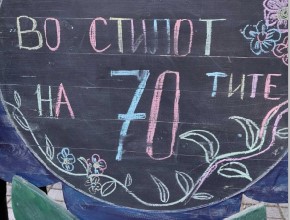
Retro-style fashion show – a time travel through 20th century fashion
The end of the school year is a great opportunity to organize creative and unusual activities through which students can express their originality and self-confidence.
That's exactly what the retro-style fashion show, organized by teachers and students, was like more....
2.6.2025
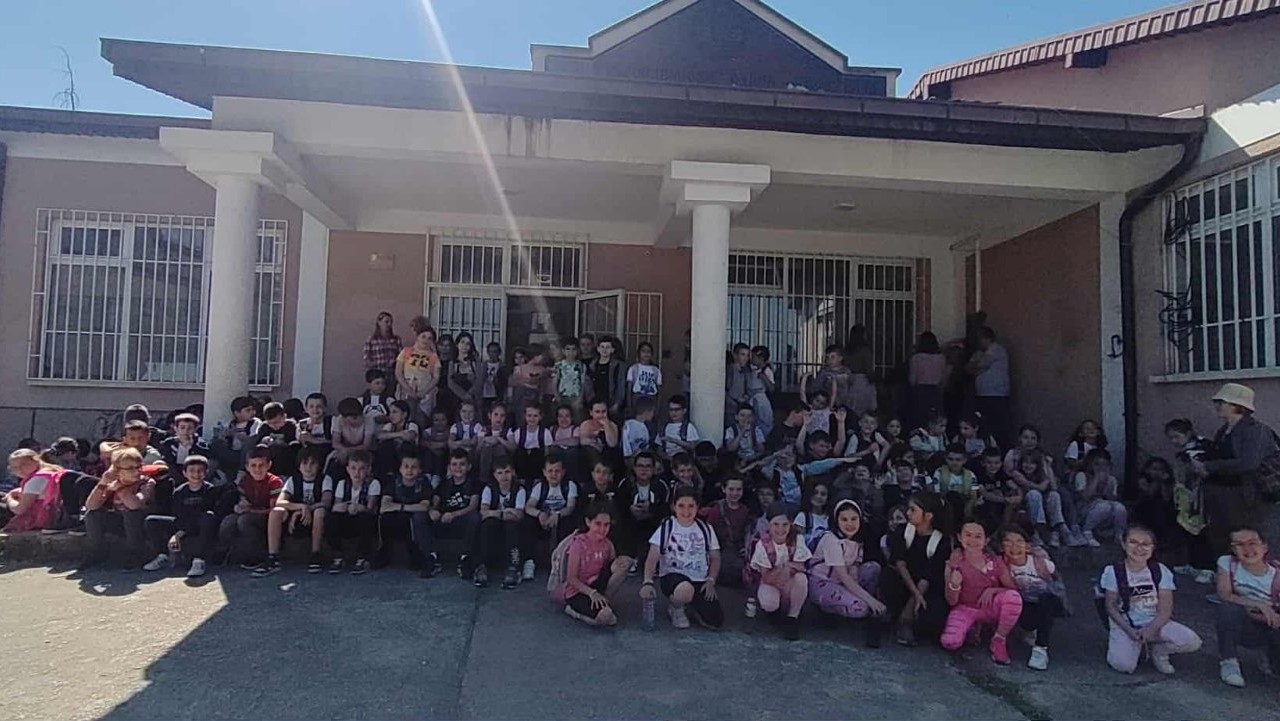
Visiting our branch school in the Racha settlement
Guided by the beautiful impressions from the one-day excursion to Skopje, where the third grade students became close to their peers from the local school, a second meeting is being organized – this time with the students from Racha as hosts.
Upon arrival, the guests were warmly welcomed by the students and teachers more...
23.5.2025
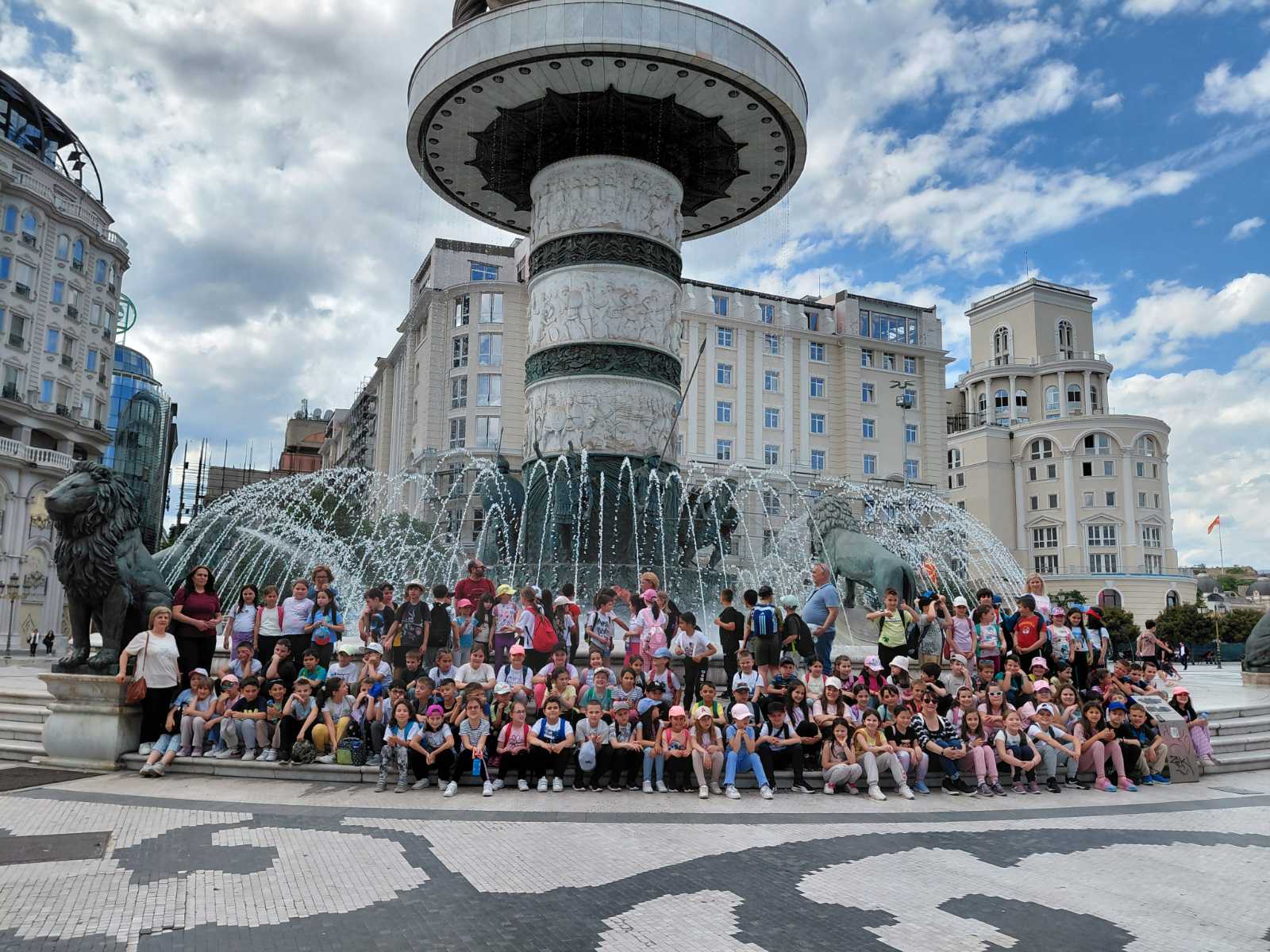
One-day excursion to Skopje
The trip started on time, according to the planned agenda. We arrived in Skopje around 11:15 AM, ready for a full and educational day.
The first stop was the Zoo, where students had the opportunity to observe the animalsmore...
Rounding numbers to the nearest ten
The number strip is a great tool for first and second grade students to learn numbers up to 100. You can find the worksheet from which you can make the strip at the link in the video description.
Number strip up to 100
The number strip is a great tool for first and second grade students to learn numbers up to 100. You can find the worksheet from which you can make the strip at the link in the video description.
Units and tens - single and double digit numbers
Application of Arabic numerals and the way we write with them. The decimal or decimal system that we use when writing numbers implies a positional arrangement of the digits, whereby 1 ten contains 10 units (1T=10U). You can find the worksheet at the link
Activities from previous school years
you will find them on theARCHIVE
RINGING SCHEDULE
Morning:
07:30 - 08:10
08:15 - 08:55
09:20 - 10:00
10:05 - 10:45
10:50 - 11:30
11:35 - 12:15
Afternoon:
13:30 - 14:10
14:15 - 14:55
15:20 - 16:00
16:05 - 16:45
16:50 - 17:30
17:35 - 18:15
STUDENT CODE OF CONDUCT